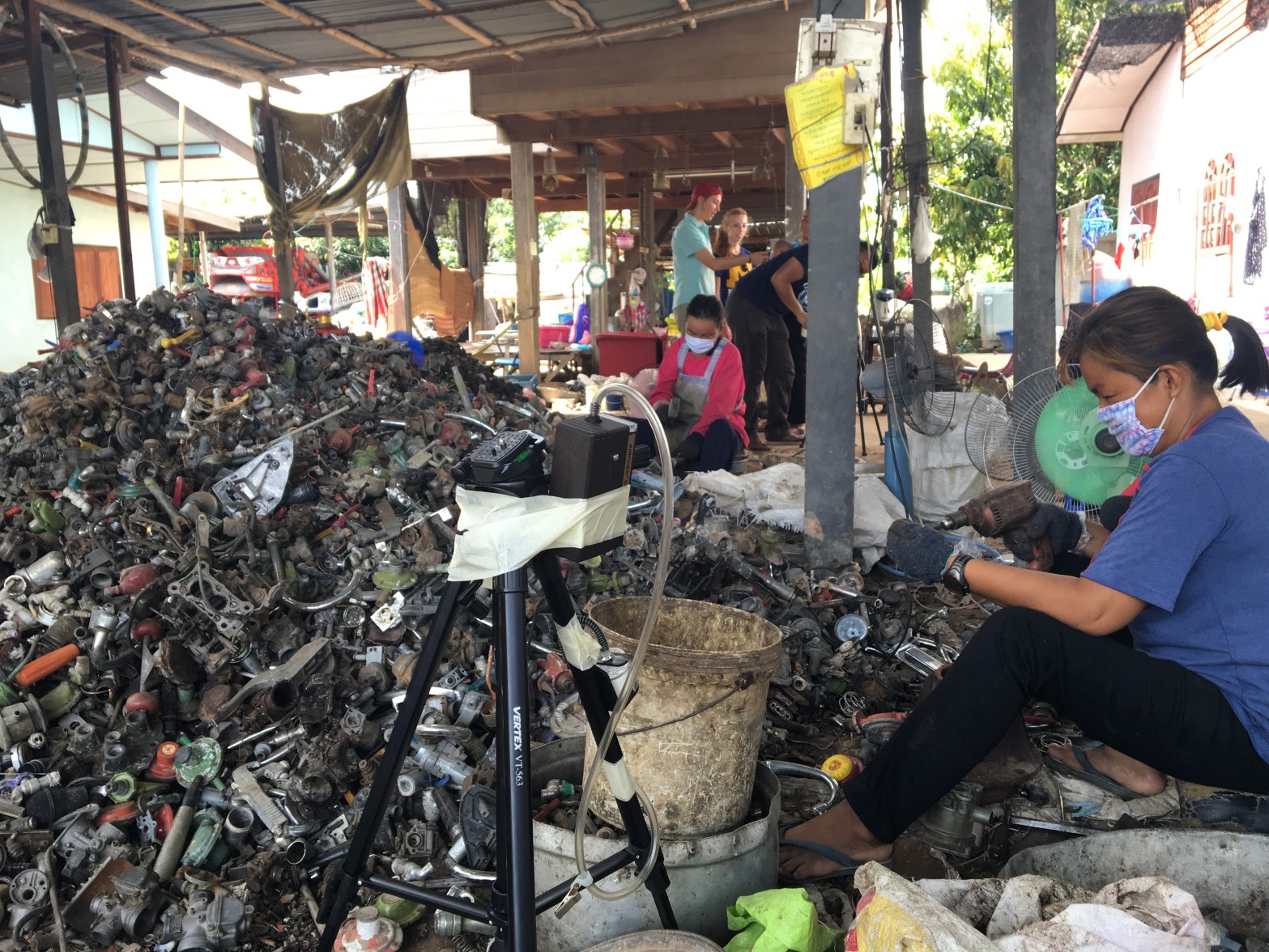
When old laptops, smartphones and smart appliances are discarded, they become electronic waste, or e-waste. These and other forms of e-waste contain substances, including mercury, lead and cadmium, that are harmful to people and the environment. They also have valuable materials that could be recycled, which would reduce carbon emissions from new materials.
But globally, just 17.4% of e-waste produced in 2019—the most recent statistical year available—ended up at a formal management or recycling facility, according to the Global E-Waste Statistics Partnership. An unknown amount more is recycled informally, often in people’s homes, without occupational and environmental safeguards.
The Exposure Research Lab has been studying how to make this informal recycling work safer in Thailand. Since the process of informal recycling is similar across countries, lessons learned there could be applied broadly.
Read the full article on informal recycling work on the U-M School of Public Health website.
 Exposure Research Lab