Cumulative Occupational and Environmental Injustices in Michigan
2024 – present
Exposures in the workplace, such as heat and COVID-19, cause hundreds of thousands of cases of disease, illness, and tens of thousands of deaths every year. Further, the most highly exposed workers in the US may be the same individuals also highly exposed to pollutants at their homes and communities. Racial/ethnic minorities in the US may be most affected by this cumulative burden, leading to occupational and environmental justice (OEJ) issues in the US. However, a critical research gap remains in understanding the full extent of cumulative occupational and environmental exposures on health and health disparities.

Addressing Environmental Injustice in Detroit – A Pilot Project
2023 – present
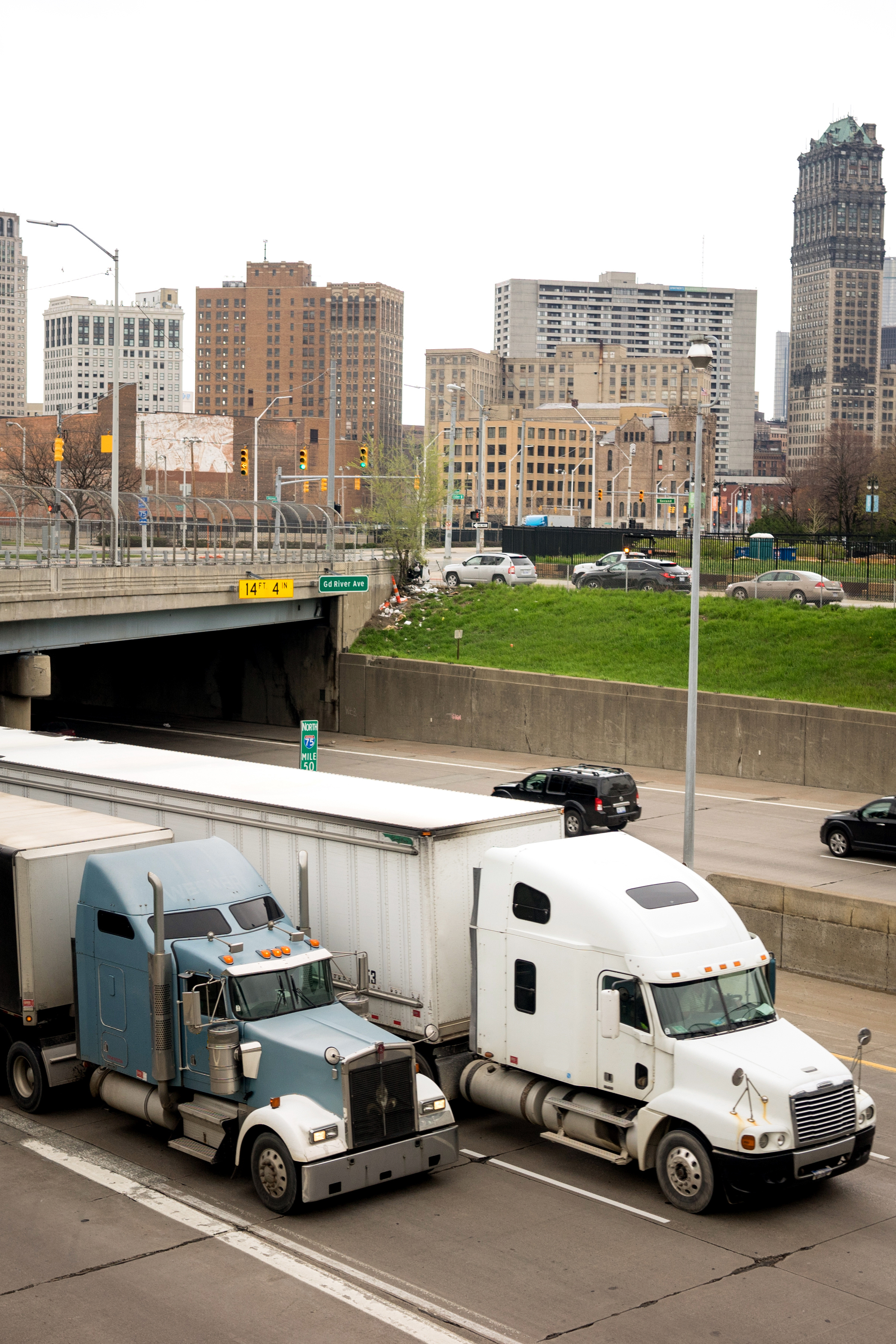
When the one-mile I-375 freeway was built Detroit in the 1950s, it displaced thousands of predominantly Black residents in the thriving neighborhoods of Black Bottom and Paradise Valley. Recently, Detroit received funding to redesign I-375, in part to replace deteriorating roadways and structures while improving safety and connectivity. Plans call for replacing the original six-lane, 55-mph freeway with a nine-lane, 35-mph boulevard. However, despite these changes, the full impacts of this increased vehicle transportation on human health have not been prioritized. One harmful impact is noise pollution. This project aims to reevaluate the original I-375 noise assessment conducted by the Michigan Department of Transportation (MDOT), which yielded a Finding of No Significant Impact (FONSI). Lab researchers will measure noise at locations originally monitored and modeled by MDOT in 2017 to identify impacted areas based on health impact using existing recommended noise limits. The project will also utilize vehicle-based monitoring to examine finer-scale spatial and temporal variation for better prediction of noise-related health impacts.
 Exposure Research Lab