Principal investigator: Richard (Rick) Neitzel
Team: Sarah Gharib
Source of funding: UM SPH Office of Global Public Health
Dates: January 2019-December 2019
Description:
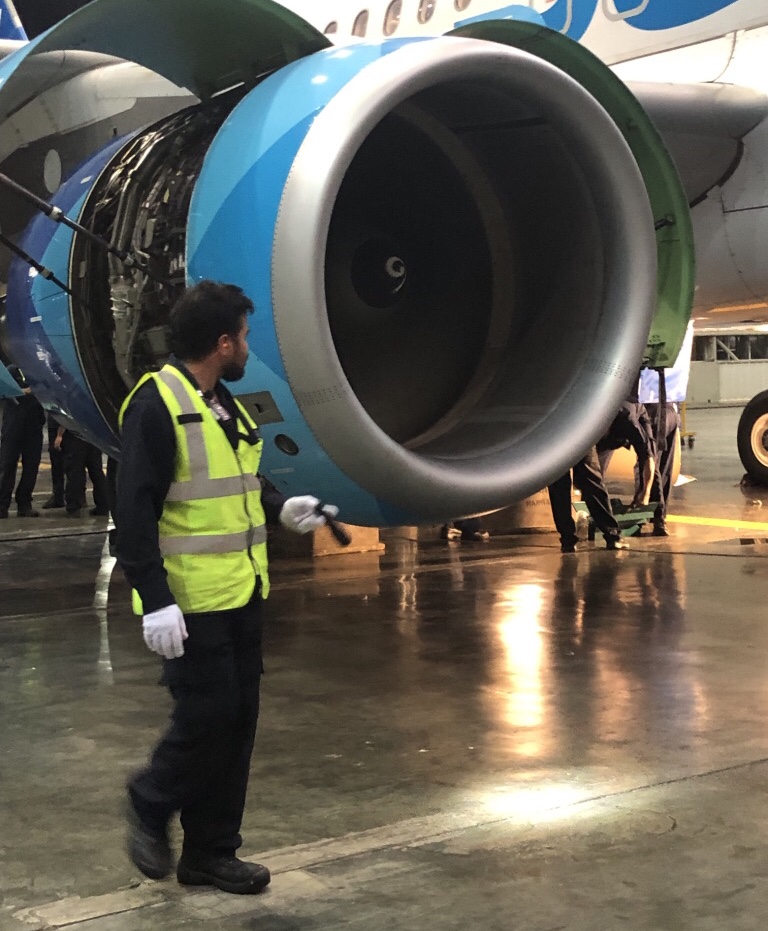
Although aircraft maintenance operations are critical to the movement of people and goods around the world, the occupational health and safety risks faced by aircraft maintenance workers are not well understood. We partnered with an Airline in the Middle East to study occupational health and safety risks among workers at the aircraft maintenance base. We aimed to recruit 100 participants to complete a baseline survey on occupational safety and health factors (e.g., behaviors, injuries, near misses, and safety climate), an activity diary, and a full-shift noise measurement. On site observations were planned to document and quantify unsafe conditions and behaviors to assess the prevalence of health and safety hazards, injuries, and near-misses, and evaluate the role of safety climate in these events.
Objectives:
- To analyze injuries, near misses, safety hazards, and noise. Participants will complete a baseline survey addressing injury and near miss (i.e., an event that could have resulted in an injury or accident) experience, job activities, perceptions of workplace hazards, use of protective equipment, and safety climate of the participants’ immediate work-group. On the same day workers will also complete a full-shift noise measurement and activity diary noting injuries and near misses. Repeated observations (n=500) of the facility to quantify the prevalence of unsafe conditions and behaviors will be recorded.
- To evaluate the relationships between multiple measures of safety and safety climate. We will assess the associations between reported safety climate at the work-group level and the prevalence of self-reported injuries and near misses. We will also assess the relationship between safety climate and the unsafe conditions and behaviors observed by the researcher.
Results:
Sixty-four maintenance workers (including engineers, mechanics, and laborers, split evenly across two teams), mostly males aged 24–64 years old, consented to participate. Overall, there was a strong safety climate with a score of 3.9 (on a scale of 0–5, with 5 indicating best climate) although participants indicated that they had not received safety or emergency response training. There was variability in the observed hazards by job, engineers and mechanics faced ergonomic hazards, mechanics faced fall hazards, and laborers faced more chemical hazards, the most common 310 hazard observations were ergonomic and fall hazards and failure to use personal protective equipment. The recommended 85 dBA American Conference of Governmental Industrial Hygienists (ACGIH) Threshold Limit Value (TLV) was exceeded in 40% of shifts. In one hanger, the Heat Stress recommendation of 28 °C TLV was almost always exceeded. There were 5 reported near misses and injuries during the short study period and noise above 85 dBA was noted in all but one report. The results in this facility suggest that safety training improvements, management of noise and heat stress management, and increased use of personal protective equipment are needed.
Publications:
Pilot assessment of occupational safety and health of workers in an aircraft maintenance facility
 Exposure Research Lab